
Dry and Sensitive Skin: Causes, Symptoms and Effective Facial Care Tips
When skin doesn’t have moisture it appears lifeless and feels rough. It can’t do its job properly which is to protect our body from things that can irritate it. Because of this, the skin becomes easy to upset.
The reasons and signs of dehydrated and sensitive skin are different but all of them have something in common. They all have a problem with their moisture level. Using the products every day to keep the skin moisturized can help with this problem. Making choices about skincare and how you live your life can also help reduce the signs of being sensitive.
When the moisture level in the skin is back to normal the skin’s ability to protect the body gets stronger. The skin can then do its job better. Hydrated skin is less likely to be sensitive looks better and feels soft and smooth.
How to Recognise Dry and Sensitive Facial Skin
Sensitive skin can look dry and lack water. Sensitive skin is a condition that can happen to any of the four skin types – normal, oily and combination.
Some people don’t see any signs. Say that certain products make their skin feel uncomfortable. As the sensitivity gets worse symptoms may include:
- A feeling of tightness and discomfort can be a sign that the skin is reacting.
- Serious signs like lasting redness, rashes, itching, tingling, burning, swelling and flaking can mean that the skin is hypersensitive.
It can be hard to tell the difference between skin and sensitive skin because these two problems often go together. Dry skin is more likely to be sensitive and sensitive skin is often dry. This can make it hard to find the problem and give the right treatment. You can read more about the signs and symptoms for both conditions in facial skin and sensitive facial skin.
Both are dry. Dehydrated skin shows signs of dryness but they have different reasons. It’s not unusual for sensitive skin to be dehydrated in some areas (like the cheeks) while being oily and breaking out in areas (especially the T-zone).
What Causes Facial Skin To Become Dry And Sensitive?
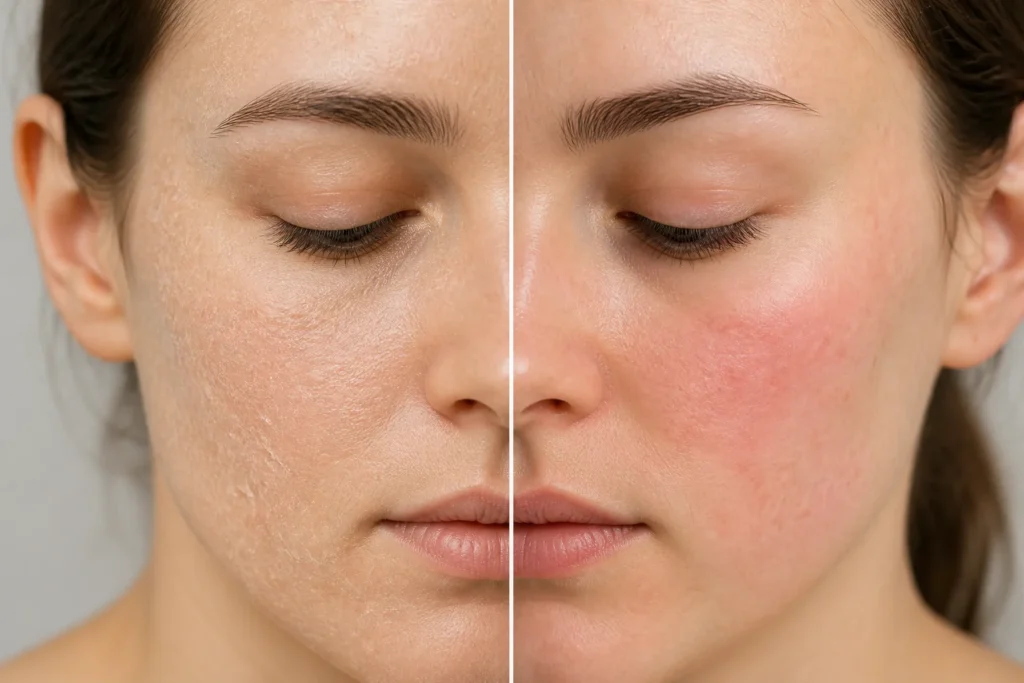
Dry skin is a skin type that is known for not having oil. It can become dehydrated because, without oil the skin can’t hold in water and loses it more easily. Dehydrated skin is a condition that happens when the skin doesn’t have water. Read our article about dehydrated skin.
The main thing that all dehydrated and sensitive skin has in common is an imbalance in moisture. When skin doesn’t have the moisture it needs to work as a barrier more moisture is lost and the skin can’t protect itself from outside things like bacteria or pollution. This can cause a feeling of tightness and discomfort.
To make a barrier skin needs the right mix of:
- Oil
- Water
- Natural Moisturising Factors, which are things that the body makes, like Urea, Lactic Acid or Glycerol
Glycerol also called Glycerine is a sugar alcohol that the body makes. The skin uses it to help hold in water. It is a part of an effective barrier. Glycerol and water are brought to the layers of skin by the skin’s own channels that move moisture – the Aquaporins. When the Aquaporins are not working right the skin gets dehydrated. Feels dry and might become sensitive.
There are things inside and outside the body that can change how well the skin moves moisture, causing it to become dry or sensitive:
Inside factors include:
- Genetics
- Hormones
- Skin diseases
Outside factors include:
- The environment like sun or pollution
- Medicine
- Food
- Lifestyle: not enough sleep, too much stress, smoking, not caring for the skin the right way
Find out more about each of these in Factors That Influence Skin.
Factors That Make Dry And Sensitive Facial Skin Worse
Once the skin has become dry and sensitive some of the things that caused the problem can make it worse and last longer.
Skincare choices
- Washing the skin much with water that is too hot can take away the oil that protects the skin and can make it drier.
- Ingredients like sodium lauryl sulphate, menthol or a lot of alcohol in some cleansers and moisturizers can also make sensitive skin uncomfortable.
- Chemical peels and exfoliating products can be irritating to skin that’s already sensitive.
- Shaving, including the action and the products used after can cause sensitivity.
Environment
- much time in the sun without proper sun protection.
- The dry air on planes and the lack of humidity from heating systems can affect how well the skin holds moisture.
Lifestyle
- Drinking water: if the body is dehydrated the skin’s moisture level is affected.
- Smoking: the bad chemicals in smoke dry and irritate the skin.
Find out more about each of these in factors that influence skin.
Treating And Relieving Dry And Sensitive Skin
Even though the reasons, signs and ways to describe the skin are different all dry, dehydrated and sensitive skin needs lots of lasting moisture. This can be done by choosing and using the moisturizer. Look for:
- Products that have been tested on and are good for skin.
- Products without perfume or other ingredients that you know can cause irritation.
- Products that are right for your skin type – normal, dry, oily, or combination.
Other steps can also help to control and reduce sensitivity by avoiding the things that cause discomfort:
- For example food choices matter. Eating well is important for skin.
- Changing how you bathe: Try to spend time in the bath or shower and use water that is not too hot. This helps keep the skin’s balance. Read more about how to care for skin.
- Cleansing gently is also key. Avoid cleansers. Use products instead like those in the Eucerin DermatoCLEAN range. Read more about building a routine for the face.
Discover our day-to-night routine for dehydrated skin and recommended Eucerin products